

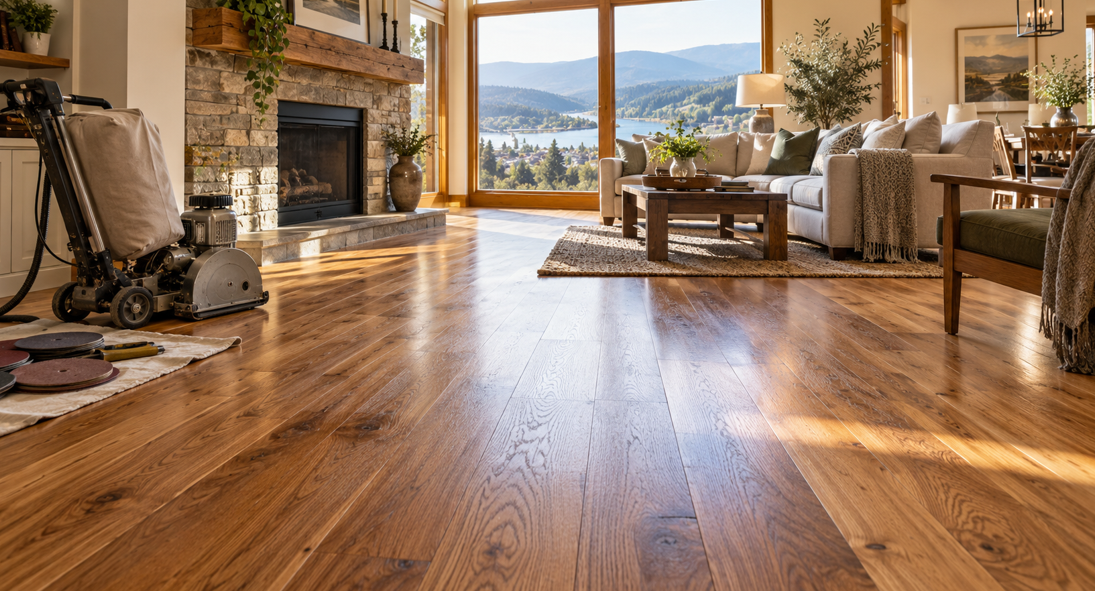
Hardwood flooring has a character that few other materials can match. Over time, the surface may collect scratches, dull areas, scuffs, fading, and signs of everyday life, but that does not always mean the floor needs to be replaced. In many homes, refinishing can restore the natural beauty of existing hardwood and give the entire room a renewed appearance.
For homeowners in Lewiston, Idaho, refinishing can be especially worthwhile in established properties where original or older hardwood remains structurally sound beneath years of wear. Instead of covering a quality wood floor or removing it unnecessarily, professional refinishing may reveal grain, colour, and character that have been hidden by an ageing finish.
At Superior Floors, flooring decisions are approached with long-term value in mind. Superior Floors Inc brings more than 80 years of combined family flooring expertise to the Palouse region, helping homeowners determine whether existing hardwood can be restored or whether replacement would make more sense.
If your hardwood floors have lost their shine or accumulated years of visible wear, understanding the refinishing process can help you decide what comes next.
What Does Hardwood Floor Refinishing Mean?
Refinishing is the process of renewing the surface of an existing hardwood floor rather than replacing the flooring itself.
Traditional refinishing generally involves removing the old finish and a very thin layer of the wood surface through sanding. The floor is then prepared and finished again with suitable stain and protective coatings.
The goal is not simply to make the floor shiny again. Proper refinishing can address many forms of surface-level wear and restore a more consistent appearance across the room.
Depending on the condition of the floor, refinishing may help reduce the appearance of:
Surface scratches
Worn or dull finish
Minor discolouration
Light staining
Small surface marks
Uneven sheen
Some colour differences caused by age and sunlight
Refinishing will not correct every flooring problem. Deep structural damage, severe water damage, loose boards, extensive movement, or a floor that has already been sanded too many times may require a different solution.
That is why the first step should be evaluating the condition of the actual floor.
How to Tell Whether Hardwood Needs Refinishing
Hardwood does not need to look brand-new at all times. In fact, some homeowners appreciate the natural patina that develops as a real wood floor ages.
The question is whether the wear is simply cosmetic or whether the protective finish has deteriorated enough that the wood needs attention.
One common sign is widespread dullness. If cleaning no longer restores the appearance and high-traffic pathways remain visibly worn, the finish may be nearing the end of its useful life.
Scratches are another clue.
A few small scratches may not justify refinishing an entire room. However, when scratches are widespread or the surface looks consistently worn, refinishing may provide a more complete solution than repeated spot repairs.
Colour changes can also become noticeable over time. Sunlight, area rugs, furniture placement, and normal ageing may cause certain sections of the floor to appear different from others.
In older Lewiston homes, these differences may have developed gradually over many years.
The important point is to examine the entire floor instead of focusing on one mark or damaged area.
Surface Wear vs Structural Damage
Not every hardwood problem can be solved through sanding and refinishing.
Surface wear affects the upper portion of the floor. This includes light scratches, worn finish, minor marks, and general dullness.
Structural problems go deeper.
Boards that are severely warped, cracked, loose, heavily cupped, or damaged by prolonged moisture exposure may require repair or replacement before refinishing can produce a satisfactory result.
Homeowners should also watch for signs of moisture problems beneath the floor.
If staining or movement continues to develop, the source of the moisture should be identified rather than simply sanding away the visible evidence.
A professional assessment can help distinguish between cosmetic wear and conditions that need additional repair.
Why Lewiston Homes May Benefit from Hardwood Restoration
The Palouse and surrounding Idaho region include many established homes where existing flooring is part of the property's character.
Older hardwood often has qualities homeowners want to preserve, including natural variation, traditional plank proportions, and the authentic appearance that develops only with real wood.
Refinishing can allow homeowners to retain those materials while updating the overall interior.
It can also work well during broader renovations. New paint, updated cabinetry, modern lighting, and refinished hardwood can dramatically change a room without requiring every original feature to be removed.
For Lewiston homeowners who value the character of an established property, restoration can offer a useful balance between preservation and renewal.
The Role of the Palouse Climate
Regional conditions matter when caring for real hardwood.
Wood naturally responds to changes in moisture and humidity. As environmental conditions change, hardwood may expand or contract slightly.
The Palouse region experiences four distinct seasons, with shifts between cold winters, warmer summers, spring moisture, and drier periods. Indoor conditions may also vary as heating and cooling systems operate through the year.
These changes do not automatically mean hardwood is problematic. They simply reinforce the importance of proper installation, maintenance, and environmental control.
Before refinishing, moisture conditions should be considered, particularly if the floor shows unusual gaps, cupping, crowning, or movement.
If the underlying cause is environmental, restoring the surface without addressing that cause may not provide the long-term result homeowners expect.
What Happens During the Refinishing Process?
The exact process varies depending on the floor and the products being used, but professional hardwood refinishing generally follows several important stages.
1. Floor Evaluation
Before sanding begins, the floor should be inspected.
The goal is to determine whether it is a suitable candidate for refinishing and whether any boards require repair.
The flooring type also matters. Solid hardwood can often be refinished multiple times during its lifespan, provided enough material remains.
Engineered hardwood requires more careful evaluation because the thickness of its real wood wear layer varies by product. Some engineered floors can be refinished, while others may not have enough surface material for traditional sanding.
Knowing what is installed is therefore important before work begins.
2. Preparing the Space
Furniture, rugs, and other items need to be removed from the work area.
Depending on the project, trim or other details may also require attention.
Preparation is important because refinishing affects the entire floor surface. Homeowners should discuss room access, dust-control methods, drying times, and when furniture can safely return before the project starts.
3. Sanding the Existing Finish
Sanding removes the worn finish and prepares the wood for its new surface treatment.
This stage requires care.
Too little sanding can leave inconsistent areas, while improper or excessive sanding can damage the floor. Professional equipment and experience help create a more even surface while removing only the amount of wood necessary.
Edges and corners also require attention because larger floor-sanding equipment cannot always reach them.
4. Repairing Minor Imperfections
Once the old finish has been removed, certain issues may become easier to see.
Small gaps, damaged boards, nail holes, or other imperfections may need attention before the new finish is applied.
The appropriate repair depends on the floor, its age, and the type of issue involved.
5. Choosing a Stain or Natural Finish
Refinishing creates an opportunity to keep the existing wood colour or change its appearance.
Some homeowners prefer a clear or natural finish that highlights the original species and grain.
Others use stain to create a warmer, deeper, lighter, or more contemporary appearance.
The best choice depends on the wood species and the surrounding room.
Cabinetry, trim, wall colour, furniture, and natural light can all influence how the finished floor appears.
6. Applying the Protective Finish
After the colour is established, protective finish coats are applied.
The finish plays an important role in the final appearance and in protecting the wood from everyday use.
Sheen levels can range from relatively matte to more reflective finishes.
Many homeowners prefer lower-sheen finishes because they provide a natural appearance and may make small dust particles or surface marks less noticeable.
Whatever finish is selected, proper application and curing are essential.
Should You Change the Colour When Refinishing?
One of the advantages of refinishing is the opportunity to update the appearance without installing an entirely new floor.
A dark floor can sometimes be taken in a lighter direction, while natural wood can often be stained to achieve a richer tone. The possibilities depend on the wood species, previous treatments, condition, and desired result.
However, homeowners should avoid selecting stain based only on a small colour sample.
Wood species absorb stain differently, and the same stain can appear noticeably different depending on the natural undertones of the floor.
Lighting also matters.
A colour that appears neutral under showroom lighting may look warmer or cooler inside your home.
Testing stain samples directly on a prepared section of the actual flooring can provide a much better indication of the final result.
Refinishing vs Replacing Hardwood
There are situations where restoration is the sensible choice and others where replacement may be more appropriate.
Refinishing may make sense when:
The existing hardwood is structurally sound
Wear is mainly at the surface
The homeowner likes the current floor layout
The wood has enough thickness for sanding
The goal is to update colour or finish
Preserving original material is important
Replacement may deserve consideration when:
The floor has extensive moisture damage
Many boards are severely cracked or warped
Large areas require structural repair
The flooring cannot be sanded again
The homeowner wants a fundamentally different product or plank format
Subfloor problems require more extensive work
A professional evaluation is useful because replacing an existing floor unnecessarily can add cost and remove material that still has years of useful life.
On the other hand, repeatedly repairing a badly compromised floor may not represent good long-term value.
For homeowners considering either restoration or replacement, exploring current hardwood flooring options can also help clarify whether preserving the existing floor or selecting something new better fits the project.
Can Engineered Hardwood Be Refinished?
Sometimes, but not always.
Engineered hardwood has a genuine wood surface, but the thickness of that upper layer varies considerably between products.
A thicker wear layer may allow sanding and refinishing, while a very thin layer may not.
Previous refinishing work also matters because some of the surface material may already have been removed.
This is one reason homeowners should not begin sanding an engineered floor without first identifying the product and evaluating how much usable wood remains.
When full refinishing is not appropriate, other maintenance or restoration methods may sometimes be considered depending on the floor's condition.
What About Deep Scratches and Pet Damage?
Pets, furniture, grit, and years of activity can leave noticeable marks in hardwood.
Light-to-moderate surface scratches may often become significantly less visible during refinishing because sanding removes the worn upper surface.
Very deep gouges can be different.
If damage extends well into the board, complete removal may require sanding more material than is advisable. Individual board repair or replacement may be a better option in some cases.
Pet-related staining can also vary.
A surface mark may be relatively straightforward, while stains that have penetrated deeply into the wood can be more difficult to remove completely.
Homeowners should set realistic expectations before refinishing begins. Restoration can dramatically improve many floors, but it cannot always erase every sign of previous use.
What About Water Stains?
Water damage deserves careful attention because the visible stain may be only part of the issue.
Minor surface discolouration may improve during sanding.
More serious damage may extend deeper into the wood or affect the shape and stability of the boards.
Before refinishing a water-damaged area, determine whether the moisture source has been corrected.
A leak, recurring wet entryway, plumbing problem, or basement moisture issue should be addressed first.
Otherwise, the same problem may return after the restored floor is finished.
Caring for Newly Refinished Hardwood
A refinished floor needs appropriate care to preserve its restored appearance.
Follow the recommended curing and furniture-return schedule for the finish used. Moving heavy furniture onto the floor too early can damage a surface that has not fully hardened.
Once the room is back in use, several simple habits can help.
Use protective pads under furniture legs. Place mats at exterior doors to capture grit and moisture. Clean spills promptly. Remove abrasive dirt through regular sweeping or vacuuming with equipment suitable for hardwood.
Avoid excessive water during cleaning.
Use cleaning products recommended for the specific finish rather than assuming that any general household cleaner is suitable.
Area rugs can also help protect busy zones, but newly refinished floors may need adequate curing time before rugs are replaced.
Good maintenance is less about constant work and more about preventing avoidable damage.
Preventing Future Wear
Every hardwood floor eventually develops some signs of use, but homeowners can reduce unnecessary wear.
Entrances deserve particular attention in Lewiston homes because seasonal conditions can bring dust, grit, rain, and winter moisture indoors.
High-quality entry mats can capture much of that material before it reaches the hardwood.
Pet nails should be kept trimmed, and furniture should be lifted rather than dragged.
If chairs move frequently, protective pads can reduce repeated scratching.
Indoor humidity should also be kept reasonably consistent when possible. Large swings in moisture conditions can contribute to seasonal movement in natural wood.
These small habits can help a refinished floor retain its appearance for longer.
Refinishing as Part of a Larger Home Update
A refinishing project can have a surprisingly large visual impact because flooring connects so many parts of a home.
If you are repainting walls, replacing trim, updating a kitchen, or renovating an open-plan living area, consider the floor early in the design process.
Changing from a reddish or very dark stain to a more natural wood tone, for example, can affect how cabinetry, walls, and furniture appear.
Likewise, choosing a matte finish rather than a glossy one may give an established floor a more contemporary character without changing the underlying wood.
The most cohesive results come from thinking about the entire room rather than treating flooring as an isolated element.
Is Your Hardwood Ready for a Second Life?
Worn hardwood does not automatically mean worn-out hardwood.
If the boards remain structurally sound, professional refinishing may restore their natural grain, improve colour consistency, remove years of surface wear, and renew the protective finish.
For Lewiston homeowners, that can be particularly valuable in established homes where original hardwood contributes to the property's character.
The right approach starts with an honest assessment.
Some floors need only restoration. Others require individual board repairs. A floor with severe moisture or structural problems may be better suited to replacement.
Superior Floors Inc brings more than 80 years of combined family flooring experience to these decisions, along with an understanding of seasonal conditions throughout the Palouse region. That experience can help homeowners look beyond surface appearance and consider the condition of the wood, subfloor, moisture environment, and long-term goals for the space.
If your hardwood looks scratched, faded, or tired but you are not sure whether it needs refinishing or replacement, explore our flooring services and free estimate options to discuss the condition of your floor and the possibilities for restoring its natural beauty.


