

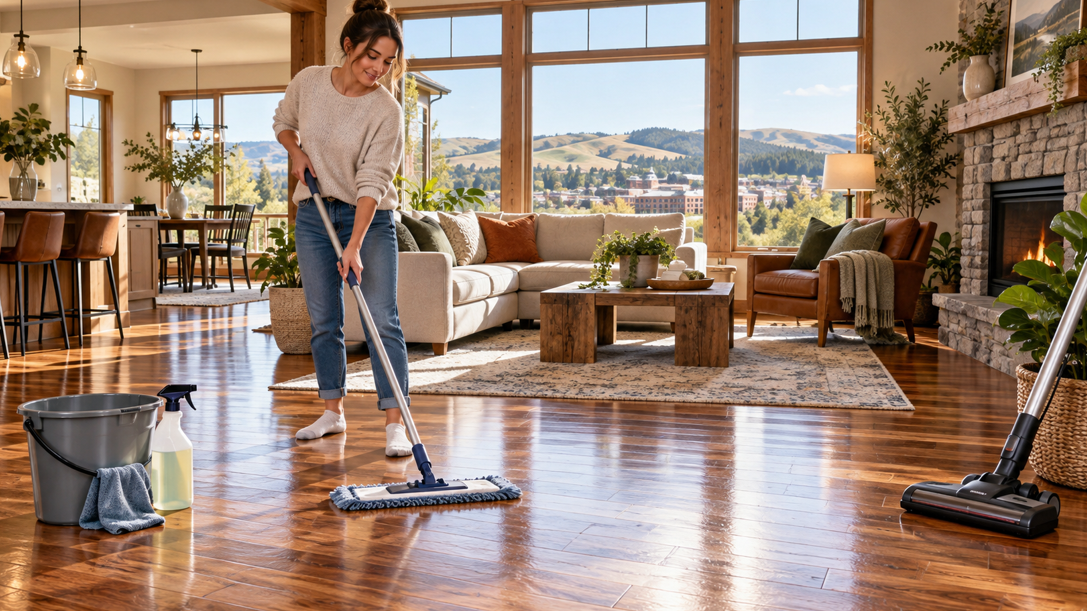
Hardwood flooring can remain beautiful for decades when it is cared for properly. Its natural grain, warmth, and character make it one of the most enduring flooring choices for homes, but real wood responds to everyday use and to changes in the environment around it.
For homeowners in Pullman, Washington, that means hardwood care should account for more than routine cleaning. Seasonal rain and snow, winter grit, spring moisture, indoor heating, pets, furniture movement, and changes in humidity can all affect how a wood floor looks and performs over time.
The good news is that maintaining hardwood does not require a complicated routine. Consistent habits, the right cleaning methods, and early attention to problems can help protect the finish and reduce unnecessary wear.
At Superior Floors, homeowners throughout the Palouse region can get locally grounded guidance on selecting and maintaining flooring. Superior Floors Inc brings more than 80 years of combined family flooring expertise to these decisions, with an understanding of how regional conditions can influence hardwood in real homes.
Whether your floors are newly installed or have already served your household for years, these professional care tips can help you protect their appearance and extend their useful life.
Start with Regular Dry Cleaning
One of the simplest things you can do for hardwood is also one of the most important: remove dust, dirt, and grit regularly.
Small particles may seem harmless, but they can act like fine sandpaper when walked across the floor. Over time, this can contribute to dullness and small surface scratches, particularly in heavily used areas.
Sweeping with a soft-bristled broom, using a suitable dust mop, or vacuuming with equipment designed for hard flooring can help reduce this wear.
Be careful with vacuum attachments that contain aggressive rotating brushes or hard components that could scratch the finish.
High-traffic areas may need more frequent attention than bedrooms or rarely used rooms.
For Pullman homes, entrances deserve particular attention because seasonal weather can bring dirt, moisture, and abrasive grit indoors.
A simple routine of removing debris before it spreads across the house can make a noticeable difference over time.
Use Water Carefully
Hardwood and excessive water do not make a good combination.
Wood is a natural material, and prolonged exposure to moisture can contribute to swelling, staining, finish damage, or movement between boards.
That does not mean hardwood cannot be cleaned effectively.
The key is controlled moisture.
Use cleaning methods recommended for your specific flooring and finish, and avoid leaving standing water on the surface. A lightly damp cleaning method may be appropriate for many floors, but the mop or cloth should not be dripping wet.
Spills should be wiped up promptly.
This is particularly important around kitchens, dining areas, pet bowls, entrances, and anywhere liquids are used frequently.
If water reaches the gaps between boards and remains there, it can create problems that are much more difficult to correct than a simple surface spill.
Choose the Right Hardwood Cleaner
Not every household cleaner is suitable for hardwood.
Some products can leave residue, dull the finish, create a slippery surface, or interfere with future refinishing or maintenance treatments.
Avoid assuming that a strong cleaner will provide better results.
Hardwood generally responds best to products specifically recommended for the finish and flooring type.
If you are unsure what finish is on an older floor, seek guidance before applying an unfamiliar product.
It can also be helpful to test any new cleaning method in a small, less-visible area before using it across the entire room.
Natural ingredients are not automatically safer either. Products containing vinegar, oils, waxes, or other household substances may affect certain finishes differently.
The safest approach is to follow product and manufacturer recommendations rather than experimenting with aggressive cleaning solutions.
Protect Your Floors at Exterior Doors
Pullman's seasonal conditions make exterior entrances one of the most important areas for hardwood care.
Rain, snow, mud, and grit can all be carried inside on shoes.
During winter, moisture from snow-covered footwear can collect around doors. Fine abrasive material from outdoor surfaces can then be tracked into hallways and living areas.
Good-quality mats can help capture much of this material before it reaches the hardwood.
Consider using an exterior mat where practical, along with an interior mat or rug at the entrance.
The mat itself should be suitable for use over hardwood, and any backing material should be checked to make sure it will not react with or discolour the finish.
Mats should also be lifted and cleaned periodically rather than being left in place indefinitely.
Moisture and debris can sometimes collect underneath them, so occasional inspection is worthwhile.
Take Shoes and Outdoor Debris Seriously
A no-shoes policy is not necessary in every home, but footwear can influence hardwood wear.
Hard-soled shoes, high heels, outdoor grit, and small stones caught in tread can all create pressure points or scratches.
This becomes especially relevant during wet or snowy weather when footwear carries more debris inside.
If removing shoes at the door fits your household routine, it can reduce dirt and moisture substantially.
If not, strong entrance matting and regular cleaning become even more important.
The goal is not to treat hardwood as too delicate for everyday life. It is simply to prevent avoidable damage where practical.
Manage Indoor Humidity
Hardwood naturally responds to the moisture content of the surrounding air.
When conditions become more humid, wood may absorb moisture and expand slightly. When indoor air becomes very dry, particularly during heating season, it may lose moisture and contract.
Some seasonal movement is normal.
However, large or prolonged changes in humidity can contribute to wider gaps, cupping, movement, or other visible changes.
This is particularly relevant in the Palouse, where homeowners experience four distinct seasons and indoor conditions can shift considerably between winter and summer.
Maintaining a reasonably stable indoor environment can help support hardwood performance.
Heating, cooling, ventilation, humidification, or dehumidification may all play a role depending on the property and season.
If you notice unusual movement in the floor, do not assume the boards themselves are defective. Environmental conditions may be part of the cause.
Protect Hardwood from Furniture
Furniture can create some of the most preventable damage on hardwood.
Chairs, tables, sofas, beds, and cabinets can scratch or dent the surface when moved directly across the floor.
Protective pads under furniture legs are a simple and inexpensive way to reduce this risk.
Check them periodically because pads can become worn, collect grit, or shift out of position.
Dining chairs deserve particular attention because they move repeatedly.
Office chairs can also create concentrated wear.
If a rolling chair is used on hardwood for several hours a day, consider whether a suitable protective mat or other solution would reduce repeated abrasion.
When moving heavy furniture, lift it whenever possible rather than dragging it.
Even a short movement across the room can leave a deep scratch that routine cleaning cannot remove.
Maintain Pet Nails and Pet Areas
Pets and hardwood can coexist very successfully, but a few habits can help protect the finish.
Keep dog nails trimmed to reduce scratching, especially if your pet runs or changes direction quickly on hard surfaces.
Place suitable mats under water bowls to catch splashes.
Clean muddy paws before pets travel across the home during wet weather.
Pet areas may also require more frequent sweeping because grit can collect around beds, doors, and feeding areas.
It is worth remembering that no hardwood finish is completely scratch-proof.
Homes with active pets may naturally develop some surface character over time.
For many owners, this patina is simply part of living with genuine wood. The goal is to minimise excessive damage rather than expecting the floor to remain permanently untouched.
Use Rugs Strategically
Area rugs can protect high-use sections of hardwood while adding softness and design interest.
They are especially useful in living rooms, dining areas, bedrooms, hallways, and entrances.
However, rug placement should be thoughtful.
Use pads and backings suitable for hardwood to reduce the risk of finish reactions or trapped moisture.
Move or lift rugs periodically so you can clean underneath them.
Sunlight can also cause exposed hardwood to change colour gradually while the wood beneath a rug remains protected.
This can result in visible colour differences if a rug stays in exactly the same position for many years.
Rotating rugs or adjusting furniture occasionally can help the floor age more evenly.
Protect Hardwood from Sunlight
Natural wood can change colour over time when exposed to sunlight.
The amount and type of change depend on the wood species, finish, window exposure, and length of exposure.
This process is normal, but uneven sunlight can sometimes create noticeable differences between areas.
Window treatments can help reduce intense direct exposure during the brightest parts of the day.
Moving rugs and furniture periodically may also allow the floor to age more evenly.
This does not mean hardwood needs to be hidden from natural light.
Rather, homeowners should recognise that genuine wood is a natural material and that subtle colour development is part of how it matures.
Respond to Spills Quickly
Accidents happen.
Water, drinks, food, pet bowls, and household activities can all lead to spills.
The most important response is usually speed.
Blot or wipe the liquid promptly using an appropriate absorbent cloth rather than allowing it to remain on the surface.
Pay attention to seams between boards and edges near walls, cabinets, or appliances.
If a large amount of water reaches the floor or remains there for an extended period, monitor the area for changes.
Persistent staining, cupping, or movement may indicate that moisture reached deeper into the flooring.
If the source is a leak rather than a one-time spill, address the leak before focusing on cosmetic repairs.
Be Careful with Steam Cleaning
Steam cleaners may seem like an efficient way to sanitise a floor, but hardwood requires caution.
Steam introduces heat and moisture, which can potentially affect both the finish and the wood beneath it.
Do not assume that a cleaning method is safe simply because a device is marketed for hard surfaces.
Follow the recommendations for your specific flooring and finish.
If steam cleaning is not approved for the floor, choose another cleaning method.
Preventing moisture-related problems is far easier than repairing boards after damage has occurred.
Know When Scratches Need Attention
Not all scratches are the same.
Very light surface marks may affect only the finish and may be relatively minor.
Deeper scratches can penetrate further and become more visible, particularly on darker floors.
The appropriate repair depends on the finish, wood species, depth, and extent of the damage.
Avoid immediately using permanent markers, household oils, or improvised touch-up methods.
They may create colour differences or complicate later professional repairs.
If scratches are widespread across an entire room, spot repairs may no longer be the most practical solution.
At that stage, professional maintenance or refinishing may deserve consideration.
Understand the Difference Between Cleaning and Refinishing
Routine cleaning maintains the floor.
Refinishing renews the surface when ordinary care is no longer enough.
Over time, hardwood may develop widespread dullness, scratches, worn traffic paths, or finish deterioration.
If the boards remain structurally sound, refinishing may allow the existing floor to be restored rather than replaced.
The process can involve sanding the worn surface and applying a new protective finish.
Not every hardwood floor can be refinished in the same way.
Solid hardwood can often be refinished multiple times when enough material remains.
Some engineered hardwood products can also be refinished, but the thickness of the real wood wear layer needs to be evaluated first.
Homeowners exploring long-term hardwood flooring care should understand the construction of their floor so they know what restoration options may be available later.
Watch for Signs of Moisture Problems
Routine care will not fix an underlying moisture issue.
If hardwood begins to cup, crown, buckle, stain, or move unusually, investigate the cause.
Possible sources include plumbing leaks, exterior water entry, wet subfloors, excessive indoor humidity, or moisture coming from below the flooring.
In Pullman homes with basements, crawl spaces, or older construction, the source may not always be obvious.
Do not simply cover a recurring problem with rugs or assume seasonal movement is responsible.
Identifying moisture early can help prevent more extensive damage.
If conditions return to normal after the source is corrected, some floors may stabilise. Others may require repair depending on the severity of the damage.
Seasonal Hardwood Care for Pullman Homes
Hardwood maintenance can be easier when it follows the rhythm of the seasons.
Autumn
As rain increases and temperatures fall, check entrance mats and make sure outdoor grit is not spreading through the home.
This is also a good time to inspect the floor before winter heating begins.
Winter
Pay close attention to snow, wet footwear, and indoor dryness.
Clean tracked-in moisture quickly and monitor the home for excessive humidity changes as heating systems operate.
Spring
Spring moisture and changing weather can create additional dirt around entrances.
Inspect high-traffic areas and look for signs of unusual seasonal movement.
Summer
Warmer months are a good time to monitor strong sunlight exposure and inspect furniture pads, rugs, and areas that may have been covered through winter.
Small seasonal checks can help catch problems before they become more noticeable.
Do Not Ignore the Finish
The protective finish is a critical part of hardwood performance.
It helps protect the wood surface from ordinary wear, spills, and dirt.
When the finish begins to wear away in traffic paths, the wood underneath can become more vulnerable.
Homeowners sometimes wait until a floor looks severely damaged before considering professional maintenance.
Earlier attention may provide more options.
If you notice sections where the sheen has disappeared, where the surface seems unusually difficult to clean, or where scratches are becoming widespread, it may be time to have the floor evaluated.
The right treatment depends on the condition of the finish and wood.
Avoid Common Hardwood Care Mistakes
Many flooring problems come from well-intentioned maintenance.
Using too much water is one of the most common mistakes.
Using an inappropriate cleaner is another.
Dragging furniture, leaving wet shoes near entrances, ignoring grit, or allowing pet water to remain on the floor can also create avoidable wear.
Another mistake is expecting hardwood to remain perfectly unchanged.
Real wood develops character. Slight colour changes, small marks, and seasonal movement can be normal.
The goal of proper care is to protect the floor's structure and finish while allowing it to age naturally.
When to Ask a Flooring Professional
Some hardwood issues are easy to manage at home. Others benefit from an experienced assessment.
Consider getting professional advice if you notice:
Persistent cupping or warping
Significant water staining
Loose or damaged boards
Large gaps that do not appear seasonal
Extensive surface wear
Deep scratches across large areas
Finish deterioration
Uncertainty about whether the floor can be refinished
Professional evaluation can help determine whether the issue is cosmetic, environmental, structural, or related to the finish.
That distinction matters because treating the wrong problem can waste time and money.
Protect the Hardwood You Already Have
Hardwood flooring does not need constant attention to remain beautiful.
The most effective care usually comes from simple, repeated habits: remove grit, limit excess moisture, protect furniture contact points, manage entryways, control indoor conditions where practical, and respond to spills quickly.
For Pullman homeowners, paying attention to seasonal conditions is particularly important. Rain, snow, indoor heating, and the region's changing humidity can all influence a natural wood floor over time.
The right maintenance routine should protect the floor without making homeowners feel that they have to organise their lives around it.
Superior Floors Inc brings more than 80 years of combined family flooring expertise to homes throughout the Palouse region. Whether your hardwood is newly installed, beginning to show wear, or part of an established home, understanding its condition and caring for it appropriately can help preserve both its beauty and its long-term performance.
If you have questions about hardwood care, damage, refinishing, or a future flooring project, explore our flooring services and free estimate options for guidance based on the condition of your floor and the needs of your home.


