

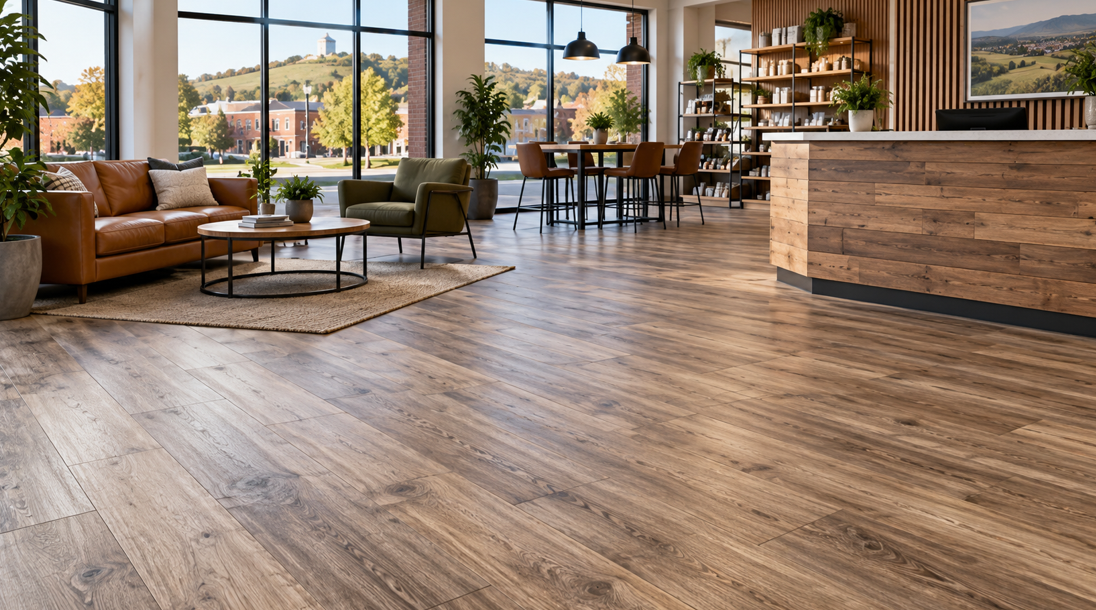
Commercial flooring has to do more than look good. In offices, retail shops, professional spaces, cafés, rental properties, and other busy environments, the floor must cope with daily foot traffic, furniture movement, dirt brought in from outdoors, routine cleaning, and the general wear that comes with serving employees, customers, students, tenants, or visitors.
For businesses in Pullman, Washington, flooring also has to make sense for the Palouse environment. Cold winters, seasonal rain and snow, changing temperatures, and wet footwear can place extra demands on entrances, corridors, reception areas, and other high-traffic zones. Choosing the right material is therefore not only a design decision. It is part of creating a commercial space that can remain practical, presentable, and easy to manage over time.
Laminate flooring can be a strong option for many commercial settings because it combines attractive wood-inspired design with durability, straightforward maintenance, and a wide range of styles.
At Superior Floors, commercial flooring decisions are approached with both appearance and real-world performance in mind. Superior Floors Inc brings more than 80 years of combined family flooring expertise to projects across the Palouse region, helping property owners and businesses compare materials based on the demands of the actual space.
If you are considering laminate flooring for a Pullman commercial property, here are the key factors worth understanding before making your selection.
Why Flooring Choice Matters in a Commercial Space
Residential flooring and commercial flooring may look similar at first, but the demands placed on them can be very different.
A commercial floor may experience hundreds of footsteps in a single day. Chairs may move repeatedly. Deliveries may pass through entrances. Customers may bring in grit, rainwater, or snow. Employees may spend long hours standing or walking across the same areas.
The flooring also contributes to the first impression of the space.
A professional office may need a clean, understated finish. A retail environment might require something warmer and more inviting. A rental property may prioritise easy maintenance and durability. A hospitality or service environment may need a material that helps the space look polished without creating complicated upkeep requirements.
Because the floor covers such a large visual area, it can influence the entire atmosphere of a commercial interior.
The right laminate flooring can help combine practical performance with a finished appearance that supports the way the business wants to present itself.
What Is Laminate Flooring?
Laminate is a manufactured flooring product built in layers.
Although construction varies by manufacturer and product line, laminate typically includes a durable surface layer, a printed decorative layer that creates the visual design, a dense core, and a backing layer that helps support stability.
The decorative layer is what allows laminate to reproduce the appearance of natural materials such as hardwood.
Modern laminate products are available in a wide range of wood tones, grain patterns, plank widths, textures, and finishes. This makes it possible to achieve looks inspired by oak, maple, hickory, walnut, and other wood species without installing real hardwood.
For a business, this can provide considerable design flexibility.
A traditional professional environment might suit a medium-tone oak look. A modern retail or office interior may work well with wider planks and a lighter finish. A rustic or locally influenced business might prefer stronger grain variation and warmer wood colours that complement the agricultural character of the Palouse.
Why Businesses Consider Laminate Flooring
There is no single flooring material that works for every commercial application, but laminate can offer an appealing balance for spaces where durability, appearance, and budget all matter.
One of its biggest strengths is the ability to create a convincing wood-inspired look without requiring the same care considerations as natural hardwood.
Businesses often need interiors that look professional while remaining practical. Flooring that requires constant attention can become a burden, particularly in spaces where employees already have many other operational responsibilities.
Laminate may also be useful in renovation projects where the goal is to update the appearance of a commercial space without automatically moving into a premium natural-wood category.
The result can be a polished, cohesive floor that supports the overall design while meeting practical day-to-day needs.
Durability for High-Traffic Areas
Traffic should be one of the first considerations when choosing commercial flooring.
A small private office may experience relatively modest wear. A busy retail store, shared workspace, rental property, reception area, or customer-facing business can place much greater demands on the floor.
Commercial-use laminate products are designed with durability in mind, although performance varies between products. This is why it is important to select flooring that is appropriate for the intended application rather than choosing purely by colour or price.
Think about where the heaviest wear is likely to occur.
Entrances usually experience more grit and moisture. Corridors create repeated traffic patterns. Areas around counters, desks, and seating may see concentrated foot movement. Rolling office chairs and movable furniture can create additional wear.
By identifying these zones before purchasing flooring, a business can choose a product more intelligently and plan protective measures where needed.
Durability does not come from flooring alone. Proper installation, suitable subfloor preparation, entrance mats, furniture protection, and regular cleaning all contribute to how well a commercial floor performs.
Laminate and Pullman’s Four-Season Climate
The Palouse has four distinct seasons, and commercial interiors experience the effects of those changes every day.
During wetter periods, customers and employees may bring moisture and dirt inside. Winter can introduce snow, slush, and grit near entrances. Seasonal temperature changes may also affect interior conditions as heating systems operate through colder months.
That makes entrance management especially important in Pullman businesses.
Good-quality mats can reduce the amount of moisture and abrasive debris reaching the flooring. Routine cleaning can prevent grit from being repeatedly walked across the surface. Spills or tracked-in water should be dealt with promptly rather than being allowed to remain.
Moisture resistance also varies between laminate products.
Some modern laminate flooring is designed with enhanced water resistance, while other products are better suited to dry areas. Product specifications should therefore be reviewed carefully before laminate is used near entrances, break rooms, or other locations where moisture is more likely.
No finished floor should be expected to solve an underlying moisture problem. If a subfloor has active moisture intrusion, that issue should be addressed before new flooring is installed.
Commercial Laminate vs Real Hardwood
Hardwood can bring natural beauty and long-term character to a commercial interior, but it is not necessarily the right choice for every business.
Real wood can be a strong fit for premium offices, boutiques, professional spaces, and businesses where natural material is central to the desired aesthetic. It also offers the advantage that many hardwood floors can eventually be refinished.
Laminate takes a different approach.
Rather than offering genuine wood, it delivers a manufactured surface designed to reproduce a wood-inspired look while providing practical advantages for busy environments.
For businesses concerned about frequent traffic, routine cleaning, surface wear, or initial project budget, laminate may offer a more suitable balance.
The important point is not to assume one material is universally better.
A commercial property should choose flooring according to traffic level, maintenance expectations, moisture exposure, desired appearance, project budget, and how long the business expects the floor to remain in service.
Where Laminate Flooring Can Work Well
Laminate can suit a variety of commercial environments when the product is properly matched to the space.
Offices
Professional offices often benefit from flooring that looks warm and polished without becoming visually distracting.
Wood-look laminate can provide a professional backdrop for desks, conference rooms, reception areas, and shared workspaces. Neutral wood tones can coordinate easily with painted walls, office furniture, and branding elements.
Retail Spaces
Retail flooring needs to support the visual character of the store while handling continuous customer traffic.
A natural wood appearance can help create warmth, particularly in boutiques, speciality shops, and customer-focused spaces where atmosphere matters.
Durability should receive particular attention in entrance areas and around checkout counters, where traffic may be concentrated.
Rental and Multi-Use Properties
Commercial and mixed-use properties may need flooring that can suit different occupants over time.
Neutral laminate designs can provide broad visual appeal and may be easier to coordinate with future changes in paint, furniture, or tenancy.
Professional Service Businesses
Salons, studios, showrooms, agencies, and similar businesses may want flooring that feels more welcoming than a strictly utilitarian surface.
Laminate can provide the appearance of wood while giving the business access to a broad range of styles and finishes.
Break Rooms and Staff Areas
Depending on expected moisture exposure and the rating of the specific product, laminate may also be considered for certain staff areas.
However, spaces where frequent water exposure is likely should be evaluated carefully, and another material may be more appropriate.
Choosing the Right Commercial Laminate
Selecting laminate flooring for a commercial property should begin with performance rather than appearance.
Colour and style matter, but they should come after the practical requirements have been established.
Consider how much traffic the space receives. Is the area open to the public throughout the day, or is it used by only a few employees? Will chairs roll across the floor? Will shelving or heavy furniture be placed on it? Is the flooring close to an exterior entrance?
Also consider how frequently the space is cleaned and what type of maintenance routine is realistic.
Once those requirements are clear, design choices become easier.
A lighter wood look may make a compact office or retail space feel brighter. Medium tones can hide everyday dust more effectively than very dark finishes in some environments. Strong grain patterns can add character, while more consistent visuals may create a quieter and more formal atmosphere.
Commercial interiors should be designed for the people who actually use them rather than simply following residential design trends.
The Importance of Wear and Usage Ratings
Not every laminate product is intended for the same level of use.
When flooring is being considered for a commercial setting, it is important to review manufacturer guidance regarding suitable applications, traffic expectations, warranties, and installation requirements.
A product designed primarily for light residential use should not automatically be assumed suitable for a heavily trafficked business.
The same principle applies within commercial spaces.
A private office, a busy entrance, and a retail sales floor may each require different levels of performance.
This is an area where expert guidance is particularly useful. The goal is not simply to choose the toughest product available but to match the flooring to the conditions of the project.
Subfloor Preparation Is Essential
A durable surface cannot compensate for poor preparation underneath.
Commercial spaces may have concrete, wood, or other subfloor systems, and each project needs to be evaluated according to the installation method and flooring requirements.
The subfloor may need to be checked for flatness, stability, cleanliness, and moisture conditions before installation begins.
This can be especially important in established properties, where previous flooring installations, repairs, renovations, or structural changes may have created uneven surfaces or height differences.
Skipping preparation can affect the finished appearance and performance of the flooring.
If the floor underneath is uneven, movement or visible imperfections may occur. If moisture is present, it should be investigated rather than simply covered.
Good commercial flooring begins before the first plank is installed.
Maintenance in a Busy Business Environment
One of laminate flooring’s practical advantages is relatively straightforward routine care.
Regular removal of dust, dirt, and grit helps reduce abrasive wear. This is particularly important in commercial spaces because debris can be carried across the floor repeatedly throughout the day.
Entrance mats can make a noticeable difference during wet Palouse weather.
Spills should be cleaned promptly, and cleaning products should be appropriate for the specific laminate product. Excessive water should generally be avoided unless the manufacturer’s instructions specifically allow a particular cleaning method.
Furniture should also be considered.
Protective pads can help beneath desks, chairs, tables, and movable displays. Where rolling chairs are used heavily, suitable protection may be worthwhile depending on the product and environment.
A simple maintenance plan established from the beginning can help preserve the floor’s appearance and reduce unnecessary wear.
Design Matters in Customer-Facing Spaces
Commercial flooring is not only a functional surface. It contributes to the way customers experience the business.
A darker traditional wood look can create a formal or established atmosphere. Lighter tones may make a space feel open and contemporary. Warm medium colours can create an approachable balance between the two.
For businesses in the Palouse, natural and wood-inspired finishes can also feel appropriate to the broader regional character.
The area’s agricultural heritage and preference for practical, natural aesthetics make wood looks easy to incorporate without making the interior feel overly decorative.
Businesses should also consider their existing finishes.
Cabinetry, wall colours, counters, shelving, furniture, signage, and branding can all influence which laminate design feels most cohesive.
Whenever possible, flooring samples should be viewed in the actual commercial space. Artificial lighting, daylight, and surrounding colours can make a sample appear different from how it looked in a showroom.
Do Not Choose on Price Alone
Project cost matters to every business, but the least expensive flooring is not necessarily the lowest-cost option over time.
A floor that is poorly matched to the level of traffic may wear sooner than expected. A product selected without considering subfloor conditions may require additional work during installation. Flooring that is difficult to maintain in a particular environment can also create ongoing inconvenience.
A more useful commercial flooring budget considers the complete project.
That includes material, preparation, installation, transitions, trim, possible furniture movement, maintenance expectations, and anticipated service life.
Businesses should also consider operational timing.
If a commercial property must remain open during renovation, installation planning may be just as important as the flooring material itself. Working through scheduling and preparation in advance can reduce disruption.
Planning a Commercial Flooring Project
Before selecting laminate, create a basic overview of the property.
Identify which rooms are being updated, approximate traffic levels, entrances, moisture-prone areas, furniture locations, and any spaces that must remain operational.
Then assess how the flooring should look.
Should it create a warm customer experience? Support a clean professional image? Make a small space feel larger? Coordinate with existing fixtures that will remain?
Once practical and visual needs are defined, product selection becomes more focused.
It is also worth planning transitions between laminate and other materials. Commercial properties often contain multiple flooring types, and poorly considered transitions can make an otherwise well-designed project feel unfinished.
A professional evaluation can help identify these details before installation begins.
Is Laminate Right for Your Pullman Business?
Laminate flooring can be an excellent choice for many commercial spaces, but the decision should be based on how the property is actually used.
For offices, retail spaces, professional businesses, rental properties, and other suitable environments, laminate can provide an appealing combination of wood-inspired design, practical maintenance, and durability.
Its flexibility is one of its strongest advantages.
Businesses can choose from traditional, contemporary, rustic, or minimalist looks while still prioritising the practical demands of a commercial interior.
The key is selecting a product rated appropriately for the environment and installing it over a properly prepared subfloor.
For Pullman businesses, it is also important to plan for regional realities. Seasonal moisture, snow, grit, and changing weather mean entrances and high-traffic areas deserve particular attention.
With the right flooring, preparation, and maintenance plan, a commercial space can remain professional and welcoming without creating unnecessary day-to-day upkeep.
Superior Floors Inc combines more than 80 years of family flooring expertise with knowledge of the homes and businesses throughout the Palouse region. Whether you are renovating an office, updating a retail environment, preparing a rental property, or improving another commercial space, choosing flooring based on real traffic and maintenance needs can help create a result that works for both the business and the people who use it.
To discuss your commercial flooring requirements, compare samples, or plan the next stage of your project, explore our flooring services and free estimate options and get guidance based on your space, usage, and project priorities.


