

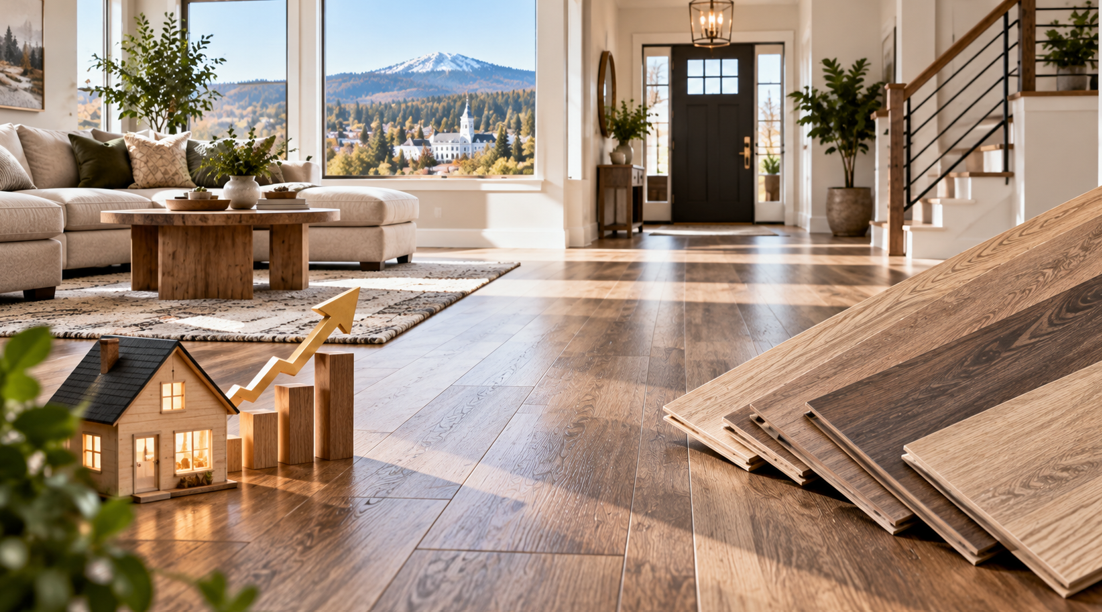
Flooring plays a major role in how buyers experience a home. It covers a large portion of the interior, connects rooms visually, and can make a property feel either well maintained or ready for another renovation. For homeowners in Moscow, Idaho, who are thinking about selling in the coming years, replacing worn flooring can therefore be part of preparing a home for the market.
Laminate flooring is often considered for these projects because it can provide an attractive wood-inspired appearance, practical durability, and a broad range of styles without requiring the investment associated with some natural flooring materials.
But does laminate flooring actually increase home resale value?
The answer is more nuanced than simply saying yes or no. Flooring can influence buyer impressions and the overall marketability of a property, but no flooring material guarantees a particular increase in sale price. The condition of the home, quality of installation, neighbourhood, broader housing market, and expectations of likely buyers all matter.
At Superior Floors, homeowners can compare flooring choices with both current needs and long-term plans in mind. Superior Floors Inc brings more than 80 years of combined family flooring expertise to the Palouse region, helping customers choose floors that make sense for their homes rather than relying on one-size-fits-all claims about value.
If you are considering laminate before selling a Moscow home, here is what to think about.
Why Flooring Matters to Potential Buyers
Most buyers notice flooring immediately.
It may not be the only feature that influences their opinion, but flooring affects almost every room they enter. Worn carpet, damaged surfaces, mismatched materials, stains, or outdated flooring can make an otherwise well-maintained property feel like it needs significant work.
Fresh, cohesive flooring creates a different impression.
It can make rooms appear cleaner, help spaces flow together, and give buyers one less project to imagine completing after they move in.
That convenience has value even when it cannot be translated directly into a guaranteed dollar amount.
Many buyers are evaluating not only the purchase price of a property but also the amount of work they expect to complete afterwards. A floor that already looks attractive and suitable for everyday use can reduce the perceived renovation burden.
This is where laminate can be useful.
What Makes Laminate Appealing for Resale Preparation?
Laminate flooring is a manufactured flooring product designed in layers, with a decorative surface that can reproduce the appearance of hardwood, stone, or other materials.
Wood-look laminate is especially common because it provides the warmth and visual structure of plank flooring while offering a different cost and maintenance profile from real hardwood.
For homeowners preparing to sell, laminate can offer several advantages.
It is available in a wide range of colours and styles, making it easier to select a design that works with existing cabinetry, paint colours, trim, and furniture.
Many products are also designed for durability and straightforward routine care.
Perhaps most importantly for a resale-focused renovation, laminate can create a substantial visual change without requiring homeowners to redesign the entire property.
Replacing a worn floor in a living room, hallway, or other highly visible area can make the interior feel noticeably more current.
Resale Value Is About More Than Material Price
One common mistake is assuming that spending more automatically creates a larger resale return.
Real estate does not work quite that simply.
A premium floor may be beautiful, but the amount a future buyer is willing to pay depends on the overall property and market. Likewise, a moderately priced flooring update may have a strong visual effect if it replaces something badly worn or inconsistent.
The more useful question is whether the flooring investment makes sense in relation to the home.
For example, installing extremely premium materials shortly before selling may not always make financial sense if buyers in that particular market are unlikely to pay substantially more because of that upgrade.
At the same time, choosing the cheapest available flooring simply to say the home has “new floors” can also be a mistake if the finished result looks low quality or does not suit the rest of the property.
A successful resale-focused project usually aims for balance: attractive design, appropriate durability, good installation, and a level of investment that fits the home.
First Impressions Can Affect Buyer Perception
When prospective buyers enter a property, they begin forming opinions quickly.
Flooring contributes to that first impression because it is visible across such a large surface.
A scratched, stained, or outdated floor can draw attention before buyers notice other improvements. Conversely, clean and consistent flooring can create a sense that the home has been cared for.
Laminate can be particularly effective when it creates visual continuity between connected spaces.
For example, using the same flooring through a living room, dining area, and hallway can reduce visual breaks and help the interior feel more cohesive.
This can be especially useful in smaller or moderately sized homes, where too many flooring transitions may make spaces feel divided.
The goal is not necessarily to impress buyers with an expensive-looking material.
It is to create an interior that feels finished, intentional, and ready to use.
Choosing a Laminate Style for Broad Appeal
If you are installing laminate primarily because you expect to sell the home, your personal style should not be the only consideration.
Distinctive design choices can be perfect for a long-term home but may appeal to a narrower group of buyers.
For resale preparation, adaptable colours are often easier to work with.
Natural oak-inspired looks, balanced medium wood tones, and understated grain patterns can coordinate with a variety of furniture and decorating styles.
Lighter flooring may help rooms feel brighter and more open, particularly where natural light is limited.
Medium tones can provide warmth without dominating the interior.
Very dark floors can create dramatic contrast, but they may make dust, pet hair, or surface debris more noticeable depending on the specific finish.
The right option depends on the home, but a generally versatile floor can make it easier for buyers to imagine their own furniture and belongings in the space.
Laminate Can Help Modernise an Interior
A home does not necessarily need a complete remodel to feel updated.
Flooring can change the visual tone of an interior significantly.
Older flooring may contain colours or patterns associated with a previous design era. Replacing it with a contemporary plank format can create a cleaner backdrop for the rest of the home.
This is particularly helpful if other permanent features are still in good condition.
Kitchen cabinets, interior doors, fireplaces, built-ins, and trim may not need replacing if a new floor helps tie them into a more cohesive overall design.
Homeowners should consider the undertones of those existing materials before choosing laminate.
A flooring colour that conflicts with fixed cabinetry or woodwork can make the interior feel less coordinated rather than more updated.
Taking samples into the actual room is one of the most useful steps in the selection process.
Durability Matters to Buyers Too
Potential buyers are not only evaluating how a floor looks on viewing day.
They may also be thinking about how it will perform after they move in.
Families with children may care about surface durability and easy cleaning. Pet owners may be thinking about scratches, tracked-in dirt, and daily maintenance. Busy professionals may prefer a floor that does not require complicated care.
Modern laminate flooring is available in products designed for different levels of residential use, so product selection should consider the expected traffic in each room.
A high-traffic hallway and a quiet bedroom do not necessarily place the same demands on flooring.
If the property is being updated for resale, choosing an appropriately rated product is important. Buyers may not know every technical specification, but they will notice whether the floor feels solid, looks properly installed, and suits the way the room is likely to be used.
The Palouse Climate Should Be Part of the Decision
Moscow homes experience the seasonal conditions that define the Palouse region.
Cold winters, spring moisture, seasonal rain, and changing temperatures can all influence how people use their flooring.
Wet shoes and winter grit are particularly relevant near exterior entrances. Mud and moisture can also become more common during transitional seasons.
This makes entry mats and routine cleaning important regardless of flooring material.
Some laminate products offer enhanced resistance to surface moisture, but homeowners should not assume every laminate floor performs the same way.
The product should be selected according to the intended room and manufacturer specifications.
It is equally important to recognise that a moisture-resistant finished floor does not solve an underlying water problem.
If a subfloor or basement area has active moisture intrusion, that should be investigated before new flooring is installed.
Subfloor Condition Can Affect the Finished Result
Buyers may focus on the visible floor, but the quality of the installation depends heavily on what is underneath.
A subfloor that is uneven, unstable, damaged, or affected by moisture can create problems even when the laminate itself is a good product.
Established Moscow properties may have additional considerations because previous renovations can leave different flooring layers, patches, height changes, or transitions between rooms.
Those issues should be evaluated before installation begins.
If a seller is updating flooring shortly before listing a home, it can be tempting to prioritise speed. However, covering a problem rather than addressing it can create complications later.
A properly prepared floor is more likely to look professional and perform as expected.
That matters because poor installation can undermine the value of even an attractive material.
Where Laminate Can Make the Biggest Visual Difference
If replacing flooring throughout an entire home is not practical, homeowners can prioritise the spaces buyers are most likely to notice.
Living Rooms
Living rooms often make a strong first impression.
A worn or dated surface can influence how buyers perceive the rest of the property. A cohesive wood-look laminate floor can give the room a cleaner, more finished appearance.
Hallways
Hallways connect several parts of the home and often experience concentrated foot traffic.
Updating them can help create visual continuity between rooms.
Dining Areas
Laminate can work well in dining spaces where homeowners want a wood-inspired appearance combined with relatively simple maintenance.
Chair movement should be considered, and furniture protection can help preserve the surface.
Bedrooms
Bedrooms may not require the same level of traffic resistance as living areas, but consistent flooring can make the home feel more unified.
Area rugs can add softness without covering the entire floor.
Home Offices
Moscow's university community means home offices and study spaces can be particularly relevant to some buyers.
A clean, low-maintenance hard surface can create a professional appearance while remaining easy to personalise with furniture and rugs.
What About Kitchens?
Kitchens deserve careful consideration.
They are high-value visual spaces in many homes, but they also experience spills, frequent cleaning, chair movement, food preparation, and moisture.
Some laminate products are designed with improved water-resistant characteristics and may be suitable for kitchen use when installed and maintained correctly.
Others may not be the best fit.
Homeowners should therefore focus on the specifications of the exact product rather than making a decision based on the laminate category alone.
If resale is the goal, practical performance matters just as much as creating a good first impression.
A floor that looks attractive but is poorly suited to its environment is not a good long-term choice.
Laminate vs Hardwood for Resale
Hardwood is often viewed as a premium flooring material because it is genuine wood and can offer long service life and refinishing potential.
That does not mean hardwood is automatically the right choice for every pre-sale renovation.
If a home already has hardwood that can be restored, refinishing may be worth considering before installing another material over it.
If a property needs a substantial amount of flooring replaced and the project budget is limited, laminate may provide a way to create a consistent wood-inspired appearance across a larger area.
The decision should depend on the property, existing flooring, project budget, and expected buyer market.
Homeowners should avoid assuming that either material automatically creates a specific return on investment.
A well-selected laminate floor can improve presentation, while inappropriate or poorly installed premium flooring may not deliver the expected benefit.
Laminate vs Carpet Before Selling
Carpet can still be appropriate in bedrooms and other spaces where softness is a priority, but older carpet often becomes a concern during resale preparation.
Visible staining, heavy wear, lingering odours, or outdated colours can distract buyers.
Laminate offers a hard-surface alternative that can create a clean, consistent look.
It can also allow future homeowners to add their own rugs rather than inheriting a permanent carpet style.
However, replacing perfectly good carpet simply because hard flooring is fashionable may not always be necessary.
The condition of the existing material should guide the decision.
If carpet is clean, neutral, and well maintained, other updates may provide greater benefit.
Avoid Over-Improving for the Market
A resale renovation should remain proportional to the home.
Homeowners sometimes become so focused on creating the most impressive possible interior that they invest beyond what makes sense for the property.
Flooring should support the home rather than attempt to reposition it into an entirely different market category.
If the house is practical, comfortable, and moderately priced, a durable and attractive laminate may fit that positioning well.
A highly specialised flooring selection may cost more without necessarily broadening buyer appeal.
The best pre-sale upgrades often reduce obvious negatives and improve overall presentation.
Replacing heavily worn floors can accomplish both.
Installation Quality Can Matter as Much as Product Choice
A quality floor can still look poor if transitions, edges, plank layout, or subfloor preparation are handled badly.
Buyers may notice gaps, movement, uneven areas, awkward cuts, or poorly planned transitions even if they do not know the technical reason.
Professional installation planning can help produce a cleaner result.
Plank direction, room shape, doorways, transitions to existing flooring, floor height, and trim should all be considered before work begins.
This becomes especially important if only part of the home is receiving new flooring.
The new laminate should feel intentionally connected to the materials that remain rather than looking like an isolated patch.
Keep Maintenance Simple Before Listing
Once new laminate is installed, homeowners preparing to sell should protect the floor during the listing process.
Routine cleaning helps prevent dust and grit from affecting the appearance.
Entry mats are useful, particularly during Moscow's wet and snowy seasons.
Furniture pads can reduce unnecessary scratches, and spills should be cleaned promptly.
Use cleaning methods recommended for the specific flooring product rather than excessive water or harsh products.
When showings begin, the floor should look cared for without appearing artificially polished or difficult to maintain.
Buyers should be able to imagine normal life in the space.
Think About the Buyer's Point of View
One of the most useful exercises before choosing flooring is to imagine walking through the property for the first time.
Would you notice several abrupt flooring transitions?
Does one room feel noticeably more dated than the others?
Does an entryway look worn?
Would a cleaner, more consistent floor help the main living areas feel connected?
These questions can reveal where a flooring investment may have the greatest impact.
The objective is not to design a home for an imaginary universal buyer. No single style appeals to everyone.
Instead, aim for a well-maintained, coherent interior that allows a broad range of people to picture themselves living there.
Is Laminate a Smart Choice Before Selling Your Moscow Home?
Laminate can be a practical part of resale preparation when the project is approached thoughtfully.
It can replace visibly worn flooring, create a more cohesive appearance, modernise rooms, and provide buyers with a durable surface that does not immediately look like another renovation project.
But flooring should not be treated as a guaranteed formula for increasing the sale price.
The value of an update depends on the condition of the existing floor, the quality of the new material, installation, the rest of the property, local buyer expectations, and the housing market when the home is sold.
For many homeowners, the greatest benefit of laminate may be improving presentation and reducing the number of obvious projects buyers see during a viewing.
Superior Floors Inc brings more than 80 years of combined family flooring expertise to homeowners throughout the Palouse region. Whether you are preparing to sell soon or simply want a floor that can serve your household well while supporting future resale appeal, choosing a product based on both practical performance and design can lead to a stronger result.
If you are evaluating flooring before listing your property, explore our flooring services and free estimate options to compare products, review the needs of your rooms, and plan an update appropriate for your home and long-term goals.


