

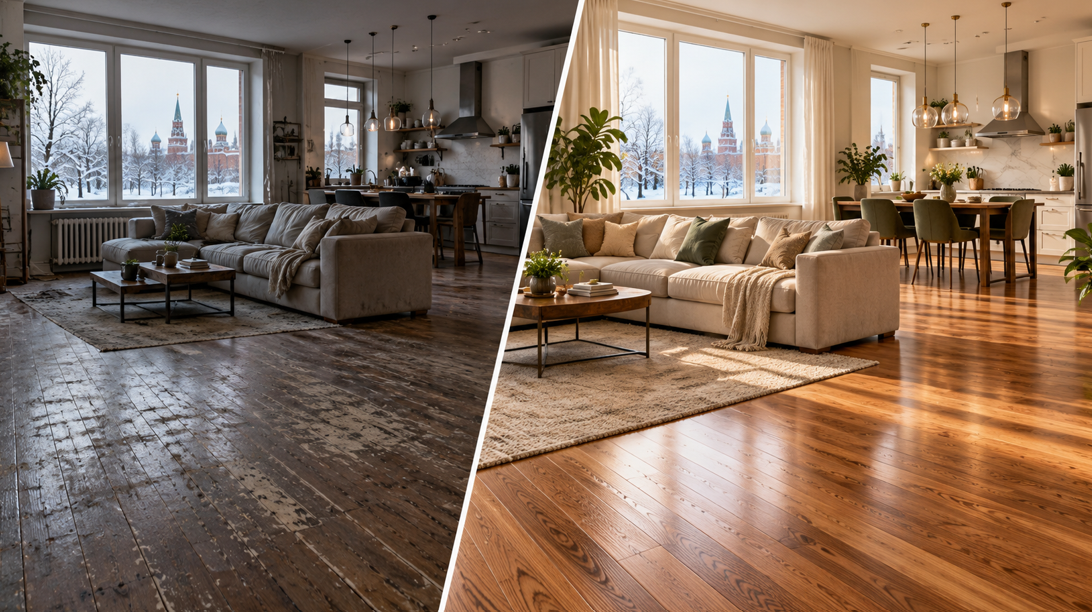
Flooring is one of the largest visual surfaces in your home, which means changing it can completely alter the way a room looks and feels. Worn carpet, scratched surfaces, dated colours, or mismatched flooring between rooms can make even a well-maintained home feel tired. Replace those surfaces with quality hardwood flooring, and the transformation can be dramatic.
For homeowners in Moscow, ID, hardwood offers more than an attractive finish. It can create a warmer, more cohesive interior, complement the character of an established home, and provide a durable foundation for changing furniture and décor over the years.
At Superior Floors, we help homeowners look beyond a small flooring sample and imagine how a new floor can change the entire character of a room. With more than 80 years of combined family flooring expertise, our team understands that selecting hardwood is not simply about choosing a species or stain. It is about finding a floor that works with your home, lifestyle, design preferences, and the seasonal conditions of the Palouse region.
If you are considering replacing older flooring, here is what the before-and-after transformation can look like.
Before: When Old Flooring Starts to Define the Room
Homeowners often become accustomed to flooring that has gradually lost its appeal. Because the change happens over years, it may not seem especially noticeable until you start looking at the room with fresh eyes.
Common signs that flooring is affecting the overall appearance of a home include:
Worn or permanently stained carpet
Scratched or heavily damaged surfaces
Outdated colours that limit decorating options
Multiple flooring materials breaking up an open floor plan
Faded finishes
Floors that are difficult to keep looking clean
Materials that no longer suit the way the household uses the space
In an older Moscow home, there may also be several generations of flooring choices within one property. A living room might have carpet while the adjoining dining room has laminate and a hallway uses a different material altogether.
Every individual surface may still be functional, but visually, the home can begin to feel fragmented.
Replacing those surfaces with thoughtfully selected hardwood can create a much stronger sense of continuity.
After: A More Connected, Finished Interior
One of the first things homeowners notice after installing new hardwood flooring is how much larger and more connected their rooms can feel.
When the same flooring flows through adjoining areas, the eye moves naturally from one space into the next. Instead of focusing on transitions between materials, attention shifts towards the architecture, furniture, natural light, and overall design of the home.
This can be particularly effective in:
Living and dining areas
Open-plan kitchens
Hallways
Entryways
Main-floor bedrooms
Connected family spaces
Hardwood creates a visual foundation rather than competing with the rest of the room.
A warm oak floor, for example, can work equally well with traditional furniture, farmhouse-inspired interiors, or a cleaner contemporary style. That versatility is valuable because most homeowners will change paint colours, furniture, rugs, and décor several times during the life of their flooring.
The floor remains the element that ties those changes together.
From Dated to Timeless
Flooring trends change, but hardwood has an advantage: natural wood offers variation and character that do not depend entirely on a particular decorating trend.
That does not mean every hardwood floor looks the same.
Today's homeowners can choose from a wide range of:
Wood species
Plank widths
Grain patterns
Surface textures
Stain colours
Finish levels
Engineered and solid constructions
The right combination can make an older room feel current without erasing the character that makes the home appealing.
This is especially relevant around the Palouse, where established homes and agricultural influences often make natural materials feel at home in the surrounding architecture. Warm wood tones can complement farmhouse details, Craftsman-inspired interiors, traditional trim, and contemporary spaces alike.
Instead of making a room feel overly designed, hardwood often gives it a more finished and permanent appearance.
Before: Rooms That Feel Dark or Visually Heavy
Floor colour has a major effect on how a room is perceived.
Dark, worn carpet or heavily patterned flooring can absorb visual attention and make a room appear smaller or heavier. This effect becomes more noticeable when the flooring is paired with darker walls, large furniture, or limited natural light.
A hardwood replacement gives you an opportunity to reconsider that balance.
After: A Brighter Sense of Space
Lighter and medium wood tones can help create an open, welcoming atmosphere while still adding warmth.
Rather than simply choosing the lightest floor available, consider how the flooring interacts with:
Natural light
Wall colours
Cabinetry
Interior trim
Doors
Furniture
Existing woodwork
A lighter natural oak, for instance, may brighten a space while allowing darker furniture to stand out. Medium brown flooring can create more contrast with pale walls while maintaining a traditional warmth.
The goal is not to follow a colour rule. It is to create balance.
Seeing flooring samples inside your own home can be particularly helpful because showroom lighting and residential lighting are very different. A colour that looks neutral under bright showroom lighting may appear warmer, cooler, lighter, or darker once placed beside your cabinets and furniture.
That is one reason Superior Floors Inc offers access to samples and shop-at-home guidance. Seeing the material in the room where it will actually be installed makes it easier to picture the finished transformation.
Choosing Hardwood Flooring for the Transformation You Want
A successful before-and-after project begins with selecting flooring based on the complete room rather than focusing on the plank alone.
Our hardwood flooring options give homeowners the opportunity to compare different looks, constructions, species, and finishes before making a decision.
Several factors can influence the final appearance.
Plank Width
Plank width changes the visual rhythm of a room.
Wider boards can showcase more of the natural grain and often create a spacious, relaxed appearance. Narrower planks provide more visible lines across the floor and can suit traditional interiors particularly well.
Room dimensions should also be considered. What looks balanced in a large open-plan room may create a different effect in a small bedroom or hallway.
Wood Tone
Warm, natural wood colours can bring softness and character to an interior. Lighter tones tend to support an airy design, while richer medium and dark tones can create depth and contrast.
Look at the undertones in your cabinets, trim, furniture, and walls rather than choosing a flooring colour in isolation.
Finish
Finish affects both appearance and everyday practicality.
Lower-sheen and matte finishes have become popular because they create a natural appearance and may make everyday dust or small imperfections less visually prominent than a highly reflective surface.
The best choice still depends on the household, room, and desired style.
Grain and Character
Some homeowners prefer consistent boards with subtle variation. Others want knots, mineral streaks, pronounced grain, and other natural characteristics to be visible.
Neither approach is inherently better. The important question is what type of character supports the atmosphere you want to create.
Before: Different Floors Breaking Up an Open Layout
Many homes evolve room by room.
A kitchen may be remodelled one year, a living area updated several years later, and a hallway left untouched. Eventually, several flooring materials can meet within a relatively small area.
That can create visual boundaries even when walls have been removed to form a more open layout.
After: Better Flow Between Rooms
Installing continuous hardwood across compatible adjoining spaces can make the layout feel more intentional.
Imagine walking from an entryway through the living area and into the dining room without a sudden flooring change at every doorway. The spaces still have separate purposes, but the shared flooring connects them visually.
Area rugs can then define seating, dining, or reading zones without permanently dividing the rooms.
This approach is particularly effective when homeowners want to update an established property while retaining its architectural character. Instead of changing every feature in the home, the flooring becomes the element that gives older and newer finishes a common foundation.
Hardwood and the Palouse Climate
A beautiful transformation also needs to perform well after the photographs are taken.
Homes in the Palouse experience four distinct seasons, including cold winters, spring moisture, and changing indoor humidity levels. Wood naturally responds to environmental conditions, so product selection, acclimation where appropriate, subfloor preparation, installation, and indoor moisture management all matter.
That does not mean hardwood is unsuitable for the region. It means flooring decisions should account for local conditions rather than treating every home and climate as identical.
Engineered hardwood may be worth discussing in situations where dimensional stability is an important consideration. Solid hardwood may be appropriate in others. Existing subfloors, room location, household conditions, and the installation environment can all affect the recommendation.
This is also why local flooring knowledge matters. The product that looks best on a display board still needs to make sense for the actual property.
Before: A Room Built Around the Floor You Already Have
Sometimes homeowners make decorating compromises because of existing flooring.
Perhaps you avoid the paint colour you really like because it clashes with an old carpet. Maybe the furniture arrangement is designed to cover damaged areas. Large rugs might be doing more work hiding the floor than contributing to the room's design.
When that happens, flooring is no longer supporting the space. The space is being designed around the flooring's limitations.
After: A Flexible Foundation for Your Style
New hardwood can reverse that relationship.
Natural wood works as a flexible design foundation, giving homeowners freedom to change other elements over time.
You can introduce:
Area rugs for seasonal colour
New furniture styles
Different wall colours
Updated lighting
Modern or traditional décor
Natural textures
Contrasting cabinetry
Because wood itself contains natural variation, it can bridge several tones within a room rather than requiring every element to match precisely.
For homeowners who plan to stay in their property for years, that adaptability can be as important as the initial appearance.
The Transformation Begins Before Installation
The most successful flooring makeovers are planned carefully.
Before choosing a product, look at your home as a whole and consider what you want the new flooring to accomplish.
Ask yourself:
Do I want the room to feel lighter?
Consider natural and lighter wood tones alongside your existing walls and furniture.
Do I want more visual continuity?
Think about whether one flooring material can flow through several adjoining areas.
Do I want to emphasise the character of an older home?
Explore wood tones, grain patterns, and plank formats that complement existing architectural features.
Do I want a cleaner, more contemporary look?
Consider understated grain, wider planks, and lower-sheen finishes.
Is durability my biggest concern?
Discuss the amount of foot traffic, pets, children, maintenance expectations, and how each room is used.
These conversations help move the decision beyond "Which sample looks good?" towards "Which floor will make this home work and feel better?"
Do Not Overlook What Is Under the Existing Floor
Before-and-after flooring transformations understandably focus on the visible result, but what happens beneath the hardwood is equally important.
Older homes can have subfloor conditions that need attention before new flooring is installed. Depending on the property, preparation might involve evaluating flatness, moisture conditions, existing materials, transitions, or other structural considerations.
This stage is not particularly glamorous, but it can influence the quality and longevity of the finished project.
Professional planning also helps identify practical questions before work begins, including:
How rooms will transition
Whether doors need clearance adjustments
How flooring will meet existing surfaces
Which installation method is appropriate
How furniture movement will be handled
Whether the product needs specific site preparation
Addressing these details early makes the final transformation feel intentional rather than improvised.
What Makes a Hardwood Transformation Successful?
A dramatic before-and-after result is not necessarily about choosing the most expensive floor.
It comes from choosing the right floor.
A successful hardwood project balances several priorities:
Appearance
The flooring should complement the architecture and create the atmosphere you want.
Performance
The construction and finish should be appropriate for the room and household.
Regional Conditions
The flooring system needs to account for seasonal changes and moisture considerations common in the Pacific Northwest.
Installation
Good preparation and proper installation are fundamental to the finished result.
Long-Term Appeal
The floor should continue working with your home even as furniture, wall colours, and interior trends change.
When all of these factors are considered together, hardwood becomes much more than a cosmetic upgrade. It becomes part of how the home feels and functions every day.
See the Transformation Before Making Your Final Choice
One of the challenges of any flooring project is imagining hundreds of square feet of material from a single sample.
Instead of relying only on photographs, compare samples beside the permanent elements of your room. Look at them during the morning, afternoon, and evening. Place them near cabinets, trim, furniture, and adjoining floors.
Natural and artificial light can substantially affect how wood tones appear.
It also helps to step back rather than studying the sample from only a few inches away. Your finished floor will be experienced as an entire surface, not as one individual plank.
A knowledgeable flooring professional can help narrow the options based on the home, desired appearance, lifestyle, and practical requirements before you make the final choice.
Ready to Transform Your Moscow Home?
Replacing dated flooring with hardwood can change much more than the surface beneath your feet. It can make connected rooms feel more cohesive, highlight the character of your home, brighten an interior, and give you a flexible design foundation for years to come.
For homeowners in Moscow, ID, the best transformation begins with a floor selected for both appearance and real-life performance in the Palouse region.
Superior Floors Inc combines more than 80 years of family flooring expertise with local knowledge and personal service. Whether you are updating one room or planning a larger flooring transformation, our team can help you compare materials, view samples, understand your options, and plan the next steps with confidence.
Ready to see what hardwood could do for your home? Contact us to discuss your project, request a free estimate, or visit our Moscow showroom to start comparing flooring options.


