

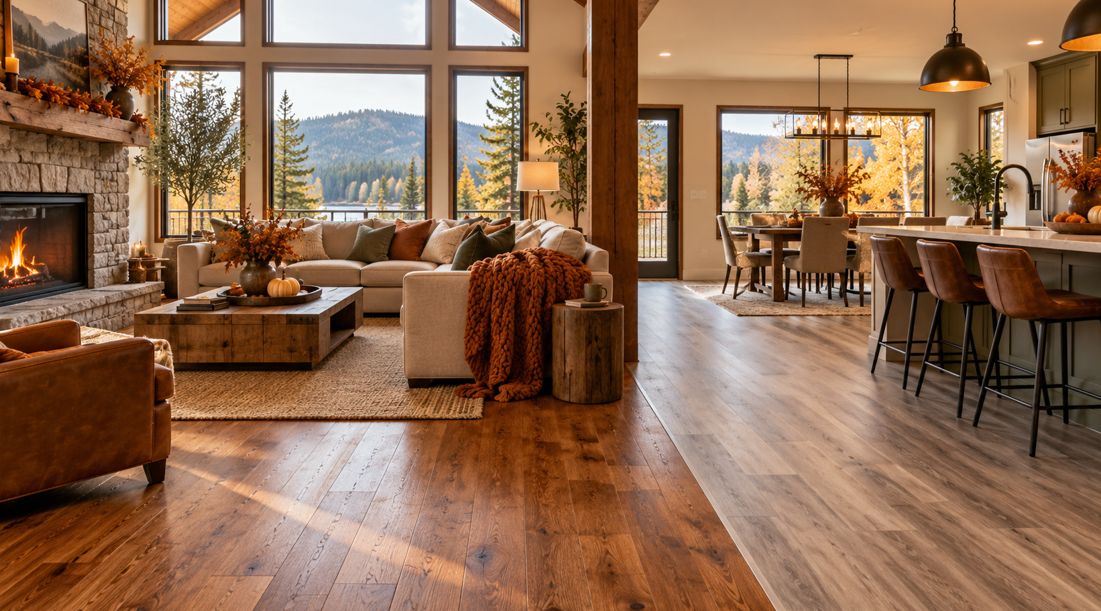
Autumn has a way of making homeowners notice their interiors again. As days become shorter, evenings move indoors, and the first signs of colder weather arrive, flooring that felt “good enough” through summer may suddenly look worn, dated, or less comfortable than you would like. For Potlatch homeowners, fall is also a practical time to think about how floors will handle the months ahead, especially when wet shoes, changing temperatures, and everyday family traffic become part of the seasonal routine.
A flooring refresh does not have to mean choosing the trendiest product or replacing every floor in the house. The better approach is to match the flooring to the room, the way your household lives, and the character of your home. Hardwood can bring lasting warmth and natural beauty to living spaces, while vinyl can provide resilient, low-maintenance performance in areas where moisture and daily wear matter most.
At Superior Floors, the goal is to help Palouse-region homeowners make flooring choices that look right, perform well, and continue to make sense years after installation. Superior Floors Inc brings more than 80 years of combined family flooring expertise to those decisions, with an understanding of the seasonal conditions and home styles common throughout the region.
Why Fall Is a Smart Time to Reconsider Your Floors
Fall naturally shifts attention back to the home, making autumn a useful season for evaluating flooring in a practical way. Ask yourself which rooms are showing the most wear. Are entryways difficult to keep clean? Does the living room feel colder or more dated than the rest of the house? Are you worried about moisture near exterior doors, kitchens, or utility spaces? Is an older floor becoming harder to maintain?
These questions matter because the Palouse region experiences four distinct seasons. Rain, snow, and seasonal temperature swings can affect how a floor feels and performs. Established homes may also have older subfloors or transitions that deserve careful consideration before new flooring is selected.
A fall refresh is less about chasing a seasonal look and more about preparing the home for the months when flooring works hardest.
Hardwood Flooring: Warmth That Fits the Season
Few materials suit autumn as naturally as hardwood. Its grain, texture, and organic character can make a room feel warmer without relying on decorative changes alone. In living rooms, dining rooms, bedrooms, and open-plan spaces, hardwood creates a visual foundation that works with both traditional and contemporary interiors.
Natural wood tones also pair easily with the farmhouse details, rustic furniture, stone, and painted cabinetry often found in regional homes.
Hardwood is not one single product, however. Species, construction, plank width, finish, texture, and colour tone all affect the final result. A floor that works beautifully in one home may not be the best choice in another.
Solid Hardwood or Engineered Hardwood?
One of the first decisions is whether solid or engineered hardwood is the better fit.
Solid hardwood is milled from a single piece of wood and is valued for its traditional construction, natural appearance, and long-term refinishing potential. In the right setting, it can be an excellent choice for homeowners who want a classic floor with enduring appeal.
Engineered hardwood uses a real hardwood surface over a layered core. That construction can provide additional dimensional stability, which may be useful in homes where seasonal changes in temperature and moisture are part of the environment.
Neither option is automatically “better”. The right choice depends on the room, subfloor, installation conditions, maintenance expectations, and the look you want to achieve.
Think beyond the sample board itself: where the floor will be installed, how much sunlight the room receives, whether exterior doors are nearby, and how the space connects to adjacent rooms.
Choosing a Hardwood Look for an Autumn Refresh
A successful fall flooring update should still look good in spring, summer, and winter. That is why timelessness matters more than choosing a floor simply because it feels seasonal.
Warm and medium wood tones can make a room feel comfortable and inviting while remaining versatile throughout the year. Natural grain variation can add character without requiring a highly decorative interior. Wider planks may create a more open visual effect, while narrower boards can suit established homes where a traditional scale feels more appropriate.
Finish also plays a major role. Lower-sheen and matte-style surfaces can provide a relaxed appearance and may be more forgiving of everyday dust and minor marks than highly reflective finishes. Textured surfaces can add rustic character, but they should still match the maintenance level you are comfortable with.
The best approach is to compare several samples in the actual room. A wood tone that appears neutral in a showroom can look warmer, cooler, lighter, or darker depending on your wall colour, cabinetry, daylight, and artificial lighting.
That is one reason sample-based planning is so useful before making a final decision.
Where Hardwood Works Best
Hardwood is especially well suited to spaces where appearance, continuity, and long-term value are priorities.
Living and dining rooms are obvious examples, especially when homeowners want one continuous surface between connected gathering spaces. Bedrooms are another strong candidate, with area rugs available when extra softness is wanted.
Open-concept homes may benefit from hardwood because a continuous floor can help several zones feel connected rather than fragmented. In older homes, however, floor height changes, subfloor conditions, and transitions between rooms should be assessed carefully.
If you are considering hardwood flooring for a fall project, it helps to compare both appearance and practical installation requirements before committing to a particular construction or style.
Vinyl Flooring: Practical Performance for Busy Areas
Hardwood may provide the natural warmth many homeowners want, but some rooms need a different balance of priorities. This is where vinyl flooring can be especially useful.
Modern vinyl options can deliver a convincing wood-inspired appearance while offering practical resistance to the kinds of everyday challenges common in kitchens, entryways, laundry areas, and other hardworking spaces. For families dealing with muddy footwear, wet coats, pets, children, or frequent activity, ease of care can be just as important as appearance.
Luxury vinyl plank, often called LVP, is popular because it can create the visual rhythm of plank flooring without requiring the same maintenance expectations as natural wood. Depending on the product, vinyl can also provide strong water-resistant or waterproof performance, making it a practical option for spaces where spills and moisture are more likely.
For local homes, that can be particularly valuable during the wet and snowy parts of the year.
Where Vinyl Can Make the Most Sense
Entry areas are one of the clearest examples. These spaces take the first impact from outdoor conditions, and flooring needs to be easy to clean while still fitting the style of the rest of the home.
Kitchens are another natural fit. Cooking spills, pet bowls, chair movement, and steady foot traffic create a demanding environment. Vinyl can provide a durable surface while still coordinating visually with wood cabinetry, painted cabinets, stone-look counters, and open-plan living spaces.
Laundry and utility rooms can also benefit from a floor chosen with moisture and maintenance in mind. In some homes, finished basement spaces may be another area where vinyl deserves consideration, particularly where homeowners want a comfortable residential appearance without using a more moisture-sensitive material.
The key is to choose the flooring according to the room rather than assuming one product should be used everywhere.
Hardwood vs Vinyl: Think Room by Room
Homeowners sometimes approach flooring as an all-or-nothing decision: hardwood or vinyl, one material for the entire home. In reality, combining materials can be a better strategy.
A home might use hardwood in the living room, dining room, hallway, and bedrooms, then transition to vinyl in the kitchen, mudroom, laundry room, or other spaces exposed to more moisture.
This room-by-room approach gives each space the flooring characteristics it needs while keeping the overall home coordinated.
The most important design consideration is visual connection. If hardwood and wood-look vinyl will meet or appear within sight of one another, avoid trying to make two different materials look almost identical. Slight differences in colour, grain, plank proportion, and sheen can become more noticeable when products are placed side by side.
Instead, choose materials that complement each other intentionally. A natural oak hardwood, for example, might pair well with a slightly contrasting vinyl tone rather than a near-match that looks accidental.
Transitions, trim details, and flooring direction also influence how polished the final result feels.
Consider the Realities of Palouse Weather
Regional conditions should always be part of flooring planning.
The Palouse experiences seasonal moisture, cold winters, and noticeable shifts between seasons. Those changes can affect the amount of moisture tracked indoors and can influence the expansion and contraction behaviour of certain flooring materials.
For hardwood, indoor humidity management and proper installation preparation are important. Wood is a natural material, so it responds to its environment. Allowing flooring to acclimate as recommended, confirming suitable subfloor conditions, and maintaining a reasonably stable indoor environment can all support long-term performance.
Vinyl has different requirements, but preparation still matters. A resilient finished surface does not compensate for an uneven, damaged, or poorly prepared subfloor. Older homes in the region may require additional assessment before installation, particularly if previous flooring has been removed or the subfloor has experienced past moisture exposure.
This is why product selection and installation planning should happen together.
Do Not Overlook the Subfloor
One of the easiest mistakes during a flooring refresh is to focus entirely on the visible material.
The subfloor underneath matters just as much.
An uneven subfloor can create movement, noise, visible imperfections, or installation problems. Moisture issues can affect multiple flooring types. Older floors may also hide previous repairs, height differences, or structural details that need attention before new material is installed.
If you are updating flooring in an established Potlatch property, professional evaluation can help identify those concerns early. That makes it easier to choose a product that suits the actual conditions rather than making decisions based only on appearance.
A beautiful floor depends on good preparation.
How to Make a Fall Flooring Refresh Feel Cohesive
Even when only one or two rooms are being updated, the project should feel connected to the rest of the home.
Start by looking at permanent or semi-permanent elements: cabinetry, interior doors, trim, fireplaces, countertops, and large pieces of furniture. Flooring does not have to match these elements exactly, but it should relate to them.
Then think about contrast. If the room contains many dark surfaces, a medium or lighter floor may provide balance. If the interior is mostly pale and minimal, a warmer or more character-rich wood tone can give the space definition.
Also consider how the floor will look under autumn and winter lighting. As natural daylight becomes more limited, artificial lighting has a greater effect on how flooring colour is perceived. This is another reason viewing samples at home can be so helpful.
Autumn character can come from rugs, textiles, artwork, and natural accents. The flooring should provide a durable foundation that continues to work when those seasonal layers change.
Maintenance Matters Before You Buy
A floor only feels like a good choice if its maintenance requirements suit your household.
Hardwood typically benefits from routine dry cleaning methods, prompt attention to spills, protective pads under furniture, and sensible moisture control. Entry mats can help reduce tracked-in grit that may scratch or dull the finish over time.
Vinyl is generally straightforward to maintain, but it still benefits from regular removal of dirt and debris. Heavy furniture should be handled carefully, and cleaning products should be appropriate for the specific floor.
Pets, children, entertaining habits, outdoor access, and the amount of daily traffic should all influence the decision.
If your home has a busy entry used throughout fall and winter, durability may need to rank above achieving a particular wood species or decorative look. If the room is a quieter formal living space, appearance may take a stronger role.
There is no universal priority list. The best flooring decision reflects how you actually live.
Plan the Project Before Holiday Activity Picks Up
Autumn schedules can become busy quickly. If you are hoping to refresh a room before holiday gatherings or before winter settles in, planning early gives you more time to compare products, review samples, prepare the room, and account for installation needs.
Start by identifying the rooms involved and how they connect to nearby flooring. Note exterior doors, stairs, transitions, and areas where the subfloor may need closer attention. Then narrow the material options based on performance before choosing colour and style.
A flooring project should not feel rushed. The right floor will be part of the home long after one season ends.
Refresh Your Potlatch Home with a Floor Chosen for the Long Term
Fall is an ideal time to make your home feel warmer, more comfortable, and better prepared for the seasons ahead. Hardwood can bring natural character and lasting visual appeal to living areas, bedrooms, and gathering spaces. Vinyl can deliver practical durability and easier moisture management in busy rooms where everyday performance matters most.
For many homeowners, the best result is not choosing one material over the other. It is understanding where each one works best and creating a home that feels consistent from room to room.
Superior Floors Inc combines more than 80 years of family flooring expertise with a locally grounded understanding of homes across the Palouse. Whether you are refreshing one room or planning a broader flooring update, thoughtful product selection, realistic maintenance expectations, and proper installation preparation can make the difference between a floor that simply looks good today and one that continues to perform for years.
When you are ready to explore materials, compare samples, or plan your project, request a free estimate and get guidance based on your home, your priorities, and the way you live.


